November. The not-quite-autumn-but-getting-toward-winter month. I like late autumn and winter. The gloomy, drab days, accompanied by that unending and dreary drizzle, can become cosy nights in, with the heating on, wrapped up in something warm. The crisp, cold mornings when Belfast looks so handsome as the rising yellow sun casts its light on the frost, and mist crowns the glistening surrounding hills on one side of the city and hangs low over the lough on the other. A promise of the brighter days that will come with the passing of the months, and the renewal that will accompany time.
You might like winter too, you might not. But why is it relevant? Why am I talking about this in the context of a Private Rented Sector Conference?
I want you to imagine for a moment what it would be like if those cosy nights in were impossible. If those cold, crisp mornings couldn’t be appreciated because they brought anxiety about topping up your heating, with money you’d set aside for rent, to combat that damp and mould you’ve long been struggling to keep at bay.
For many people living in the private rented sector, winter is a constant battle to keep their home warm and dry, to manage increased costs, and an inability to look past making this month’s rent payment to keep a roof over their head and provide for their family at Christmas. To stave off the possibility of homelessness.
As the housing crisis persists, for many, this is the reality of their winter. The private rented sector has the highest fuel poverty rate of all tenures in Northern Ireland. It has the highest rate of poverty because of housing costs. It is beset by rapid rent price inflation. Loss of rented accommodation consistently remains in the top three reasons for homelessness presentations to the Northern Ireland Housing Executive. Homelessness is at record levels, and right now, Housing Rights’ experience is that it has never been more difficult to prevent homelessness from the private rented sector.
Our annual Private Rented Sector Conference is every November, at the start of the difficult months, when it is hardest for struggling renters. It is due to the context described above that we settled on this year’s theme, 'The Private Rented Sector and Homelessness Prevention,' and the key question of how to prevent homelessness was the focus of the day.
At Housing Rights, we firmly believe that the best cure for homelessness is prevention in the first instance. We envision a society where everyone has a home, where the winter months don’t mean stress and worries that they often do for too many, including the threat of homelessness. We aim to create a society where people can feel safe and confident in their homes throughout the year, and we believe that orienting our homelessness response framework around prioritising prevention is an essential part of the solution to our housing crisis.
Setting the Context
To ask how, though, we must know why. Why is change needed? Why is now the time to orient our homelessness intervention toward prevention? This year, the conference got off to a slightly different start. Our CEO, Kate McCauley, began by demonstrating the level of need from the PRS by reflecting on the number of people who call our service for help and support. She informed the Conference that we see a disproportionate level of housing need arising from the sector, with private renters consistently over-represented in our advice work. Private renters amount to 33% of total calls received by Housing Rights, making up the largest cohort of people who need our help. The tenure, however, accounts for 17% of households in Northern Ireland. Affordability and disrepair persistently rank as the top issues that renters need our help with. Preventing homelessness from the private rented sector, where we were once most able to prevent homelessness, has, since 2022/23, become the most difficult.
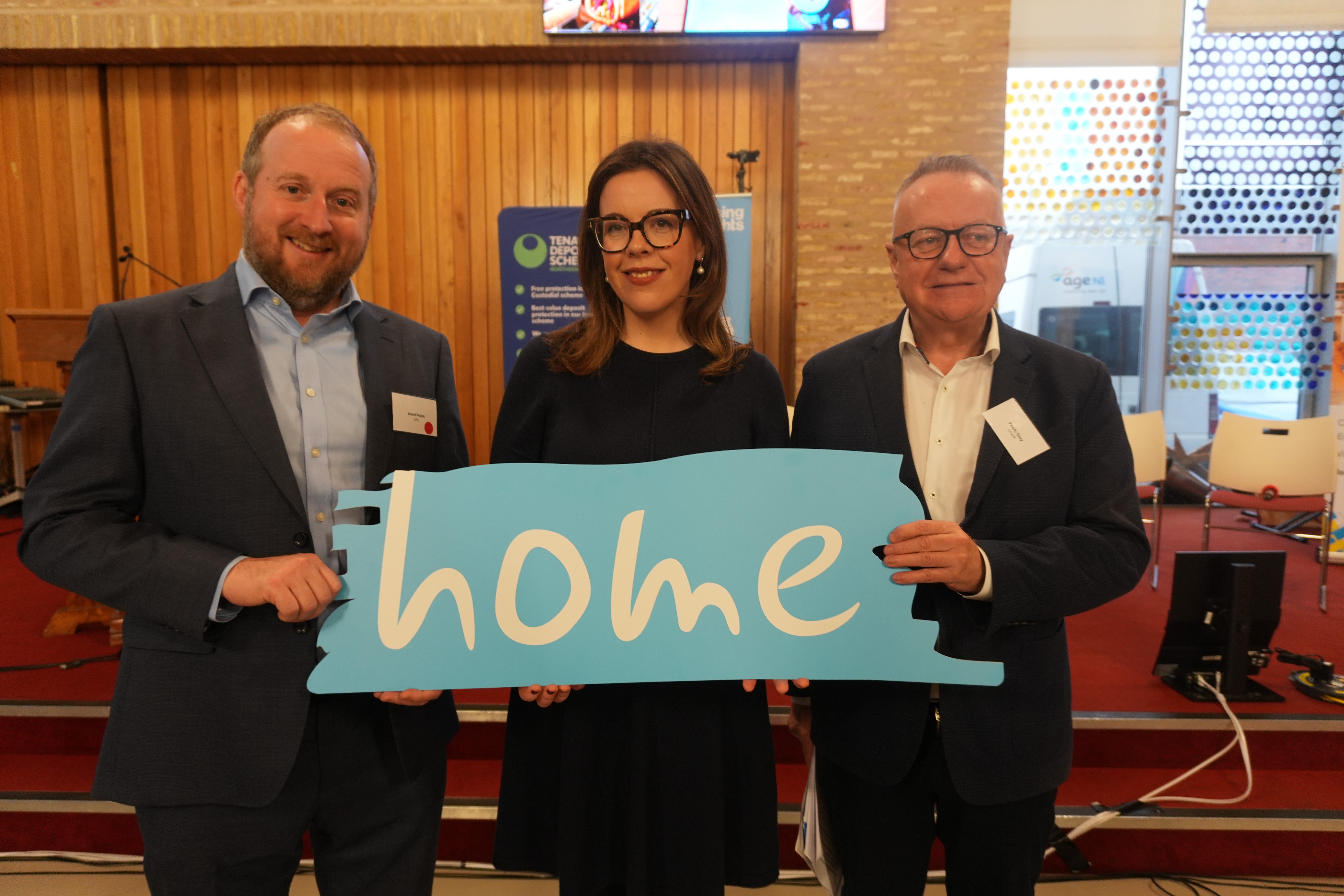
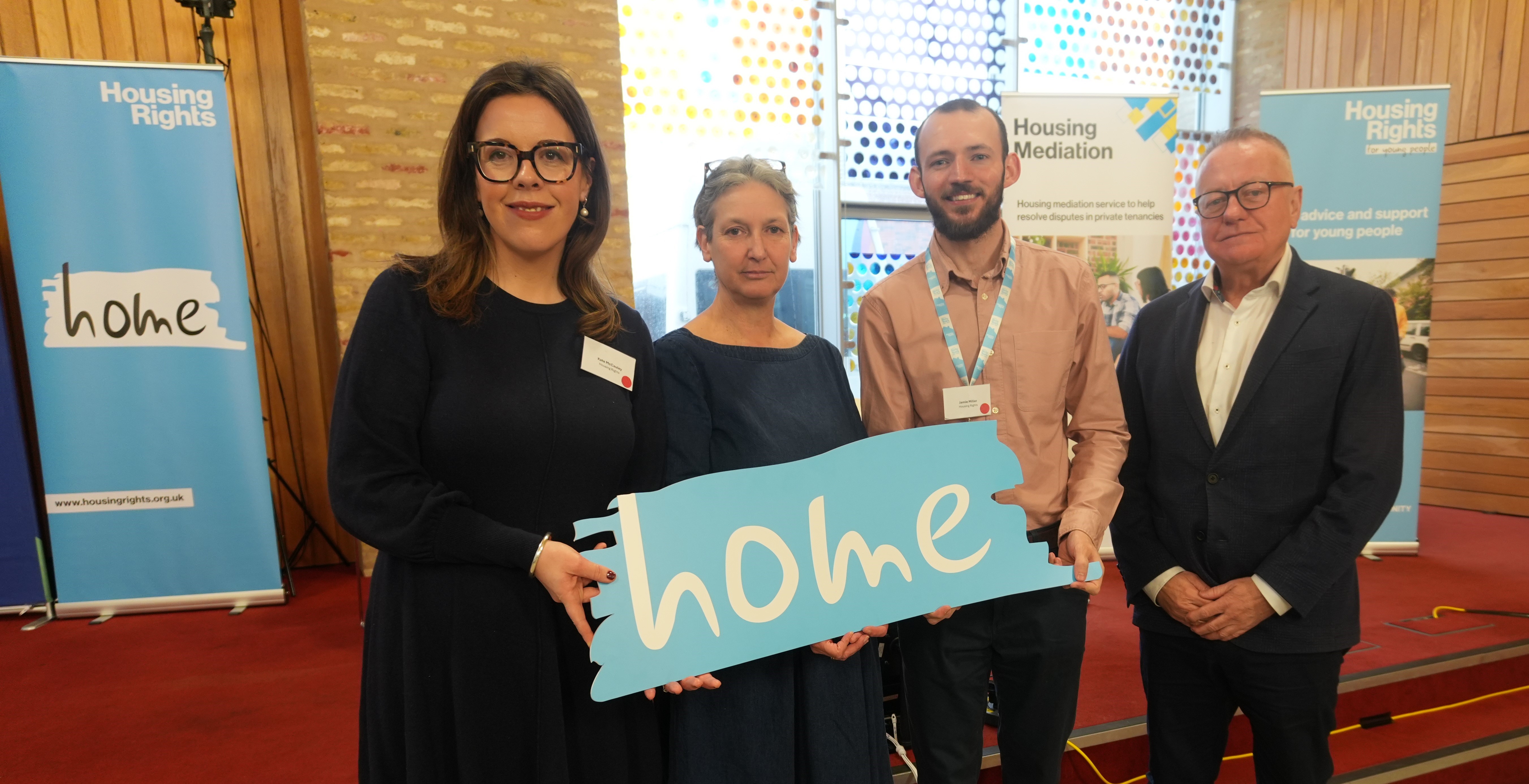
Following Kate’s opening, we welcomed David Polley, Head of Housing Supply Policy at the Department for Communities, Jordan Buchanan, CEO of PropertyPal and Dr Julie Rugg of the University of York to set the scene of the sector. David brought us up to speed on recent reforms and the Department’s future plans. Jordan set the scene for the sector in the context of the wider economic environment, while also focusing on the housing market and the supply-demand challenges that are currently driving inflation. Dr Rugg, meanwhile, focused on the interactions between homelessness and the private rented sector, and our principal means of intervention. This was a particularly pertinent contribution that shed light on many parallels between homelessness in England and Northern Ireland, as well as the areas we must target to prevent it.
There were clear lessons to be learned from the first section of the day. While progress is being made, the private rented sector remains precarious. While tenure security will soon improve, we will remain behind neighbouring jurisdictions in our lack of indefinite tenancies with protection from no-fault evictions. While wage growth and the economic outlook in Northern Ireland is strengthening, house prices and rent inflation remain strong, ensuring that problems with affordability will persist. The lack of regulation in the private rented sector in Northern Ireland means that the most vulnerable of our tenants remain open to exploitation by a minority of landlords who operate outside the law.
Challenges in the Sector
Our second section sought to drill down and examine the challenges faced by private renters. Jenni Millar, from Renters’ Voice, provided us with the lived experience of private renters in Northern Ireland and the various challenges they face. It was clear that focusing on security of tenure and the persistent cases of letting agents charging illegal letting fees are not the only challenges that tenants face. Jenni pointed to the experience of a member of Renters’ Voice, who repeatedly reported a disrepair issue to a landlord to no avail, only to suffer an accident due to that same issue and later be issued with a notice to quit. Jenni’s contribution demonstrated that the lack of regulation in the sector causes multiple and interconnected problems for tenants, that can leave them vulnerable to being threatened with homelessness through no fault of their own.
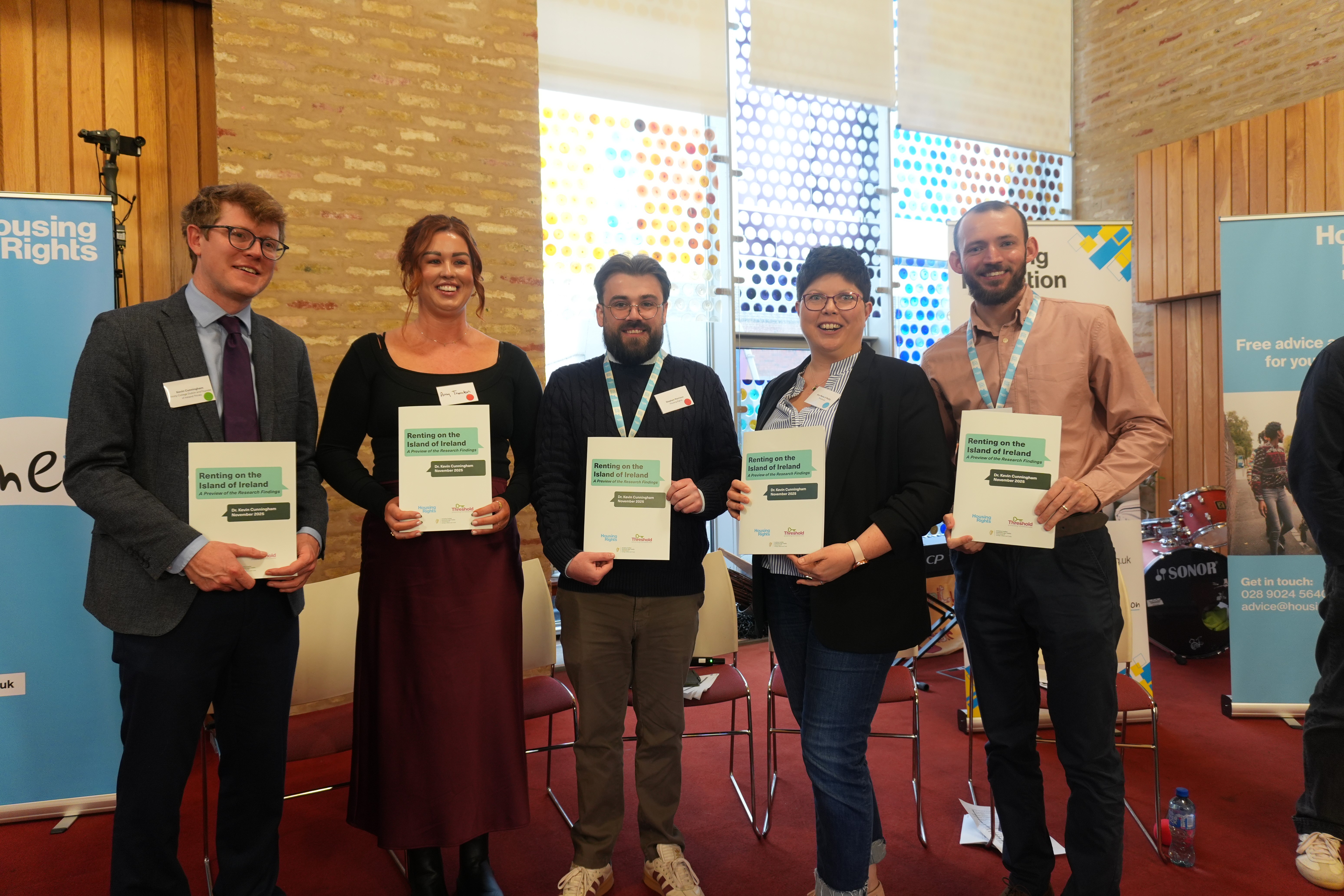
Next, we heard from Dr Kevin Cunnigham, a researcher who led a first-of-its-kind survey on the experience of private renters on the island of Ireland, commissioned by Housing Rights and our colleagues at Threshold. Although these were the preliminary findings, this comparative study shed light on similar themes on both jurisdictions, including security of tenure, high levels of unaffordability, and difficulty in having repairs carried out. A short panel discussion was held in support of this, I joined this panel, alongside Ann-Marie O’Reilly of Threshold, Amy Thornton, an expert by experience and member of the research advisory group, and Dr Cunningham, where we were able to dive a little deeper into the lessons drawn. The full publication of the survey findings will be launched in January.
At Housing Rights, we believe that participation and lived experiences are key to good policy design. If we are to prevent homelessness in the private rented sector, we can be offered no greater insights as to its causes than from people who have experienced it. We cannot answer the why question without their input. This section allowed us to hear directly from Renters’ Voice, whose members have experienced homelessness from the sector and the challenges that beset it, as well as examine recent survey results from 1,300 renters from across the island of Ireland.
Solutions
Having answered why we need a change toward homelessness prevention, our third section addressed the how.
James Mullaney, from Crisis Scotland, joined us to talk about the importance of grounding a prevention strategy within a strong legislative framework. Strong legislation will enable the flow of preventative policy and practice. James outlined examples of Scotland’s strong legislative framework, including the Private Residentials Tenancy, which introduced indefinite tenancies and banned no-fault evictions, and the Letting Agent Code of Practice, which set clear standards and expectations for letting agents. Another key feature of the Scottish system is the First Tier Tribunal, which is free to access and acts as a recourse to justice service to resolve tenant-landlord disputes outside the court system. We also heard of the introduction of a rent control framework, enhanced minimum standards, eviction delay duties, and the ’ask and act’ duty.
The implementation of this legislation allowed preventative policy and practice to take precedence in Scotland. James provided numerous examples of successful outcomes being delivered, from Perth and Kinross Council, where 2,000 households were helped into new PRS accommodation, preventing them from becoming homeless, to Glasgow City Council, where a referral-led, PRS prevention team engaged with over 600 families and prevented homelessness in 85% of cases.
Having examined the good policy and practice which have driven positive outcomes in homelessness prevention in Scotland, we next looked at what emerging evidence is telling us about what works and what doesn’t work. Where are the opportunities to implement positive homelessness prevention interventions, and how can we make them as effective as possible? To answer these questions, we welcomed Luke Arundel, Evidence and Data Lead for the Centre for Homelessness Impact.
Luke emphasised that our systems are not yielding improved outcomes, despite being dominated by excessive spending on reactive crisis policy. While acknowledging barriers such as limited supply and stretched resources, the shift required is to move resources to upstream prevention, to solve potential homelessness situations before they reach a crisis point. It is the duty of all public services to share the responsibility and ensure effectiveness of early intervention and prevention.
Our system can be oriented towards homelessness prevention with the below policy frameworks in place:
- To strengthen our safety net,
- To improve access to affordability, including an end to the freeze of Local Housing Allowance.
Local Housing Allowance was discussed at the beginning and at the end of the day at the Conference from Dr Rugg.
Luke mentioned how the freeze has had a disastrous impact on the ability to prevent homelessness within the private rented sector. There must be a focus on sustaining tenancies, with access to legal representation prioritised for tenants, and early intervention mediation services to help resolve disputes before they reach a point of collapse.
The private rented sector is unable to absorb all the risks and pressures arising from the poor supply of social and affordable homes. This is why, supply must be incentivised. Emerging data shows promising signs that tax incentives, risk funds and training incentives may be effective in encouraging building new homes. Data must be used to identify the risk of homelessness before it reaches a crisis point and a targeted, proactive outreach is required to avert those crisis points from occurring. We must see a shift from reactive statutory duties to early intervention and prevention that is supported by a strong legislative framework.
Our presentations ended with a contribution from Brian O’Kane of Northern Ireland Housing Executive (NIHE), who gave us an overview of the homelessness prevention services already in place, and how the NIHE are using testing and learning approaches to continually iterate on and improve those services.
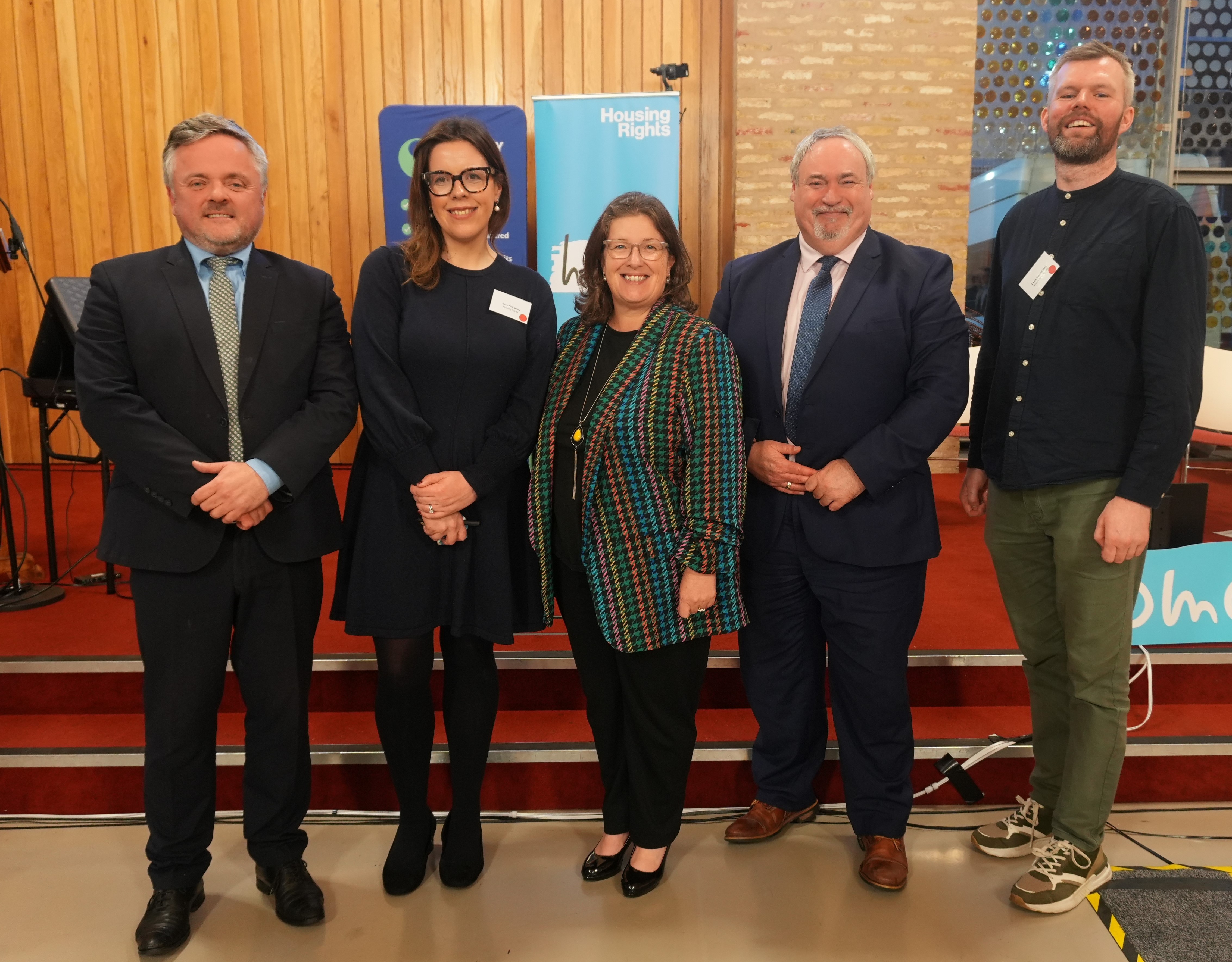
Finally, we heard from our legislators. Sinn Féin MLA Colm Gildernew, Alliance Party’s Kellie Armstrong, Gerry Carroll of People Before Profit and the SDLP’s Carl Whyte joined us to discuss their respective parties’ policy priorities for reform in the private rented sector and prevention of homelessness.
Takeaways from the Day
This was one of those gloomy and drab November days I mentioned at the beginning of this blog. We are in a housing crisis, one that is causing financial pain, uncertainty and risk of homelessness for private rented tenants. One that is resulting in record levels of homelessness. This was evident throughout the day by data and by lived experiences.
Our lack of regulation leaves our most vulnerable open to exploitation and the affordability issues remain persistent and dangerous. The most vulnerable are under constant threat of no-fault notices to quit. This creates an environment where poor standards and maintenance are accepted by private renters because the alternative may mean homelessness.
Yet, if we are looking for those green shoots of renewal, they exist. There are solutions to this crisis, and it is not insurmountable. The economy is showing tentative signs of improvement, and reforms are forthcoming that will enhance the rights of private tenants and provide additional security. Minimum standards will also improve.
There is evidence that prevention works.
But there is work to do. If we are to orient our efforts towards preventing homelessness, we must embed it in a strong, rights-based legislative framework that guarantees affordability interventions, security of tenure and the right to a home of good repair and standard. A legislative framework which prioritises prevention and places it at the centre of the role of relevant public authorities.
From this legislative framework, we can implement the policies to create effective, evidence-based interventions and solutions, such as increasing financial security for our most at-risk, removing the threat of no-fault evictions, ensuring that recourse to justice and dispute resolution is accessible and targeted, expanding innovative supply options such as intermediate rent, driving forward data collection and usage to target at-risk households or areas, or reorienting our statutory duties away from costly, crisis-stage interventions and toward cost-effective prevention and sustainability.
By no means have we reached the brighter days and overcome the housing crisis. But if our contributors on this gloomy, November day showed us something to take away and be hopeful about, it’s that we have the tools available to make a start. Now it is a matter of choice for our legislators and decision makers. If we want the private rented sector to be part of the solution to the housing crisis, it must be a safe place for renters, and guaranteed by a prevention-driven, rights-based legislative framework.


 Kate McCauley — Chief Executive